Physicly
Lean Physique: What Body Fat It Takes and How to Get There
A lean physique is about 10 to 15% body fat for men and 18 to 24% for women. Find your lean goal weight, how many weeks it takes and how to keep your muscle.
Quick answer
A lean physique is a body with low enough fat for muscle shape to show: roughly 10 to 15% body fat for men and 18 to 24% for women, below the 18 to 24% and 25 to 31% that ACE calls typical. Most people get there by losing 0.5 to 1% of body weight a week while lifting and eating high protein.
Key takeaways
- A lean physique is low body fat over real muscle; without the muscle, low body fat reads as skinny rather than lean.
- Your lean goal weight is your current weight times one minus your body fat, divided by one minus your target body fat.
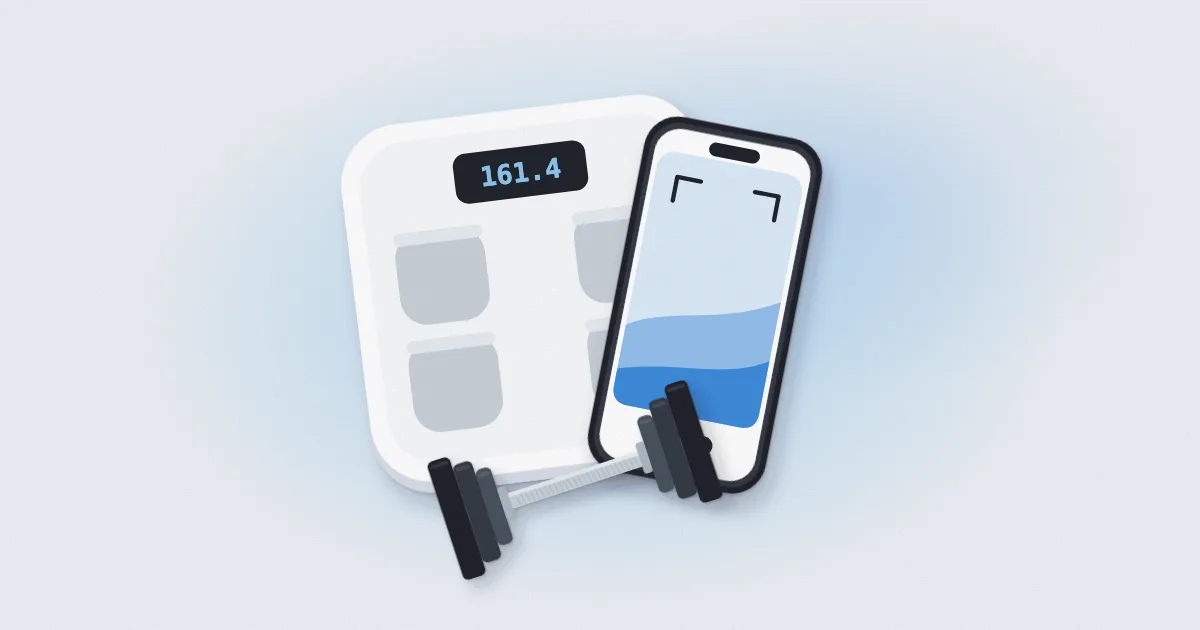
- A 180 lb man at 22% body fat reaches about 13% at 161 lb if he keeps his muscle, which means losing about 19 lb of fat.
- Losing 0.5 to 1% of body weight a week while lifting is the pace evidence reviews recommend for keeping muscle on a diet.
- Photos, waist and lifts decide when you are lean enough; a body fat estimate is a checkpoint, not a finish line.
You want to look lean: muscle that shows, a flat waist, arms with some shape. Most advice stops at "lose fat and lift", which is true and not much use. This guide puts numbers on a lean physique: the body fat range it usually means, the weight you'd need to reach it if you keep your muscle, and how many weeks that takes at a pace that protects muscle.
What is a lean physique?
A lean physique is a body with low enough body fat that the shape of your muscles shows in normal light: an outline of the abs, a visible line between shoulders and arms, a waist clearly narrower than your chest. It's a body fat level combined with enough muscle to show, not a weight.
That second part matters. Lean and skinny are different things. Skinny means light, often with little muscle. Lean means low fat over real muscle. Two people can weigh the same and sit at the same body fat, and the one with more muscle reads as lean while the other reads as thin. A third version, shredded, is lean taken much further: stage-level, with striations and visible veins, usually held for days or weeks, not years.
To see what "getting lean" means in a body, open the Physicly Body Visualizer and watch a 5 ft 10 in man go from 180 lb at about 22% body fat to a lean 161 lb at about 13%. The goal body sits over the current one as a ghost, so you see exactly where the 19 lb come off.
What body fat percentage is a lean physique?
For most men, a lean physique starts at about 15% body fat and looks clearly lean at 10 to 13%. For most women, it starts at about 24% and looks clearly lean at 18 to 22%. Women carry more essential fat, so the same look sits about 8 points higher, roughly the gap in the ranges below.
There's no official "lean" category, so here is how those numbers line up with the ones that do exist. The American Council on Exercise (ACE) treats 18 to 24% for men and 25 to 31% for women as typical for an average non-athlete, and considers less than 6% for men or 14% for women dangerously low (ACE, via Verywell Health, 2024). A lean physique is the band between those two lines.
| Men | Women | What it usually looks like | |
|---|---|---|---|
| Typical non-athlete (ACE) | 18–24% | 25–31% | Soft waist, little muscle detail |
| Lean physique, starting to show | about 14–15% | about 23–24% | Upper abs faintly visible in good light, arms and shoulders have shape |
| Lean physique, clearly | about 10–13% | about 18–22% | Ab outline in normal light, shoulder and arm separation, flat waist |
| Shredded (stage, short term) | under about 8% | under about 15% | Striations, veins, very hard to hold |
| Dangerously low (ACE) | under 6% | under 14% | Health risk |
The "lean" and "shredded" rows are our working ranges, not a clinical category. Where you store fat changes the picture: some people show abs at 15% and others need 11%. Treat the numbers as a target zone and let your photos and waist decide when you're there.
How much weight do you need to lose to look lean?
If you keep your muscle, your lean goal weight is your lean mass divided by what's left after your target body fat:
Goal weight = current weight × (1 − current body fat) ÷ (1 − target body fat)
Take the 5 ft 10 in man from above: 180 lb at 22% body fat. His lean mass (everything that isn't fat) is 180 × 0.78 = 140.4 lb. To be 13% fat with the same lean mass, he needs to weigh 140.4 ÷ 0.87 = 161.4 lb. That's 18.6 lb to lose, all of it fat.

Here is the same math for common starting points. Find your weight and your estimated body fat; the cell shows the lean goal weight and, in brackets, the fat to lose.
Men, target about 13% body fat
| Weight now | At 18% body fat | At 22% | At 26% |
|---|---|---|---|
| 160 lb | 151 lb (−9) | 143 lb (−17) | 136 lb (−24) |
| 180 lb | 170 lb (−10) | 161 lb (−19) | 153 lb (−27) |
| 200 lb | 189 lb (−12) | 179 lb (−21) | 170 lb (−30) |
| 220 lb | 207 lb (−13) | 197 lb (−23) | 187 lb (−33) |
Women, target about 23% body fat
| Weight now | At 28% body fat | At 31% | At 35% |
|---|---|---|---|
| 130 lb | 122 lb (−8) | 117 lb (−14) | 110 lb (−20) |
| 150 lb | 140 lb (−10) | 134 lb (−16) | 127 lb (−23) |
| 170 lb | 159 lb (−11) | 152 lb (−18) | 144 lb (−27) |
| 190 lb | 178 lb (−12) | 170 lb (−20) | 160 lb (−30) |
The result is only as good as your body fat estimate. Home scales, apps and calipers can miss by several points for one person, as we covered in how accurate body fat scanner apps are. Use the goal weight as a first checkpoint, not a finish line: when you reach it, look at your photos and decide whether to keep going.
How long does it take to get a lean physique?
At a muscle-friendly pace of 0.5 to 1% of body weight a week, most people need about 10 to 22 weeks to lose 10% of their weight, the gap for many people who start near average body fat. The 180 lb man above, losing 18.6 lb, needs about 11 weeks at 1% a week, 16 weeks at 0.7% and 22 weeks at 0.5%.
That pace isn't arbitrary. A review of evidence for natural bodybuilders recommended losing about 0.5 to 1% of body weight per week to keep as much muscle as possible (Helms, Aragon and Fitschen, 2014). In a study of 24 elite athletes who lifted four times a week, the group losing about 0.7% of body weight a week gained 2.1% lean mass while losing 31% of their fat mass; the group aiming for about 1.4% a week kept lean mass flat and lost less fat (21%) (Garthe et al., 2011).
| Weight to lose | At 1% a week | At 0.7% a week | At 0.5% a week |
|---|---|---|---|
| 5% of body weight | about 5 weeks | about 7 weeks | about 10 weeks |
| 10% | about 11 weeks | about 15 weeks | about 21 weeks |
| 15% | about 16 weeks | about 23 weeks | about 32 weeks |
| 20% | about 22 weeks | about 32 weeks | about 45 weeks |
The weeks assume the rate stays a fixed share of a shrinking body weight. Real cuts are messier: the first week drops extra water, plateaus come and go, and holidays happen. Add a few weeks to whatever the table says, and, as our rule of thumb, plan a break if the cut runs past four or five months.

Should you cut first or build muscle first?
Cut first if your lean goal weight still leaves you looking solid; build muscle first if it would leave you looking thin. The goal-weight math tells you which. If losing the fat would put you at a weight where your frame looks small, the problem isn't fat, it's muscle, and dieting further makes you skinny rather than lean.
You can check this before you start. In the Body Visualizer, compare 140 lb and 165 lb at 5 ft 10 in with the same lean build: the lighter body has even less fat on paper, about 10% against 14%, yet reads as slim rather than lean. Most of the heavier body's extra 25 lb is lean mass, and that's what makes lean look like a physique.
A rough rule of thumb (ours, not from a study):
- Waist soft, goal weight looks solid in the visualizer: cut at 0.5 to 1% a week.
- Waist fairly flat, but little muscle anywhere: recomp or a slow lean bulk first. Our guide on how long body recomposition takes shows what to expect from eating near maintenance while you lift.
- Normal weight but soft, with little muscle: you may be skinny fat, and the fix is muscle first, not a deeper diet.
How do you keep muscle while you get lean?
Keep lifting hard, keep protein high and keep the pace moderate. Muscle is the part of a lean physique you can't fake, and a cut is when it's easiest to lose.
- Lift as before. Keep the same exercises, loads and rep ranges you used to build the muscle. Cutting is not the time to switch to light weights for "toning"; the heavy work is the signal that tells your body to keep muscle.
- Eat plenty of protein. In a four-week trial with a steep 40% calorie deficit and hard training six days a week, young men on 2.4 g of protein per kg a day gained 1.2 kg (2.6 lb) of lean mass and lost 4.8 kg (10.6 lb) of fat, while those on 1.2 g/kg barely held their lean mass (Longland et al., 2016). Outside a diet, a meta-analysis found that extra protein stopped adding lean mass beyond about 1.6 g/kg a day (Morton et al., 2018). In a deficit you need more: the bodybuilding review above recommends 2.3 to 3.1 g per kg of lean mass. For the 180 lb man with 140 lb of lean mass, that's about 150 to 200 g a day.
- Don't rush. As the Garthe study above showed, halving the pace can be the difference between keeping muscle and adding a little.
- Use cardio as a tool, not the plan. Walking is an easy way to widen a deficit without eating into recovery. It doesn't replace lifting.
If you're also chasing a wider frame, our guide to the Greek god physique covers which muscles build the V shape and how to train them.
How do you know when you're lean enough?
You're lean enough when your photos show what you were after, not when a number says so. Watch three signals together, monthly:
| Signal | How to read it | Lean-enough sign |
|---|---|---|
| Waist | Tape at the navel, morning, relaxed | Still dropping by less each month while lifts hold |
| Photos | Same spot, light and pose every time | Ab outline in plain morning light, shoulders separate from arms |
| Body fat estimate | Same method, same conditions | Inside your target band for two readings in a row |
For a quick outside opinion on the photo itself, the free Physique Rater gives you a body fat estimate and a score for each muscle group it can see from one front photo, plus the group to train next. It doesn't keep your photo. Use it as a snapshot in good light, then repeat it in the same setup a month later; one score on its own says little.
The lifts are the fourth signal, and the one that warns you. If your main lifts drop for two or three weeks in a row, you're losing faster than your training can hold, so slow the cut down. Our guide on how to track muscle growth shows how to read lifts, tape and photos together.
Physicly is built for exactly this stretch: one check-in photo a day, taken with the Ghost overlay so each one lines up with the last, and an AI X-Ray that scores 12 muscle groups and estimates body fat from each photo. On a cut, that's how you see whether the weight coming off is fat while the muscle scores hold. Daily check-ins, the Ghost overlay and Compare are free; the X-Ray on every check-in is part of Ghost Pass.
Is a lean physique different for women?
The method is the same; the numbers are higher. Women carry more essential fat, so a lean look usually sits around 18 to 24% body fat, and a visible six-pack isn't required for a lean, athletic look. The ACE floor for women is 14%, much higher than the 6% for men.
Women also tend to store more fat on the hips and thighs, which are often the last places to lean out. That's why a woman can see clear arms, shoulders and upper abs while her lower body changes slowly. Judge the whole picture over months, and don't push body fat lower to chase one area.
What can a body fat number not tell you?
A body fat number can't tell you how you'll look. Two people at 13% can look very different because of muscle, frame and where they store fat. That's why the goal weight above is a checkpoint and your photos are the judge.
It can't tell you whether the weight you lost was fat. If you lose muscle along the way, you'll reach the goal weight fatter than planned and need to go lower, which is the main reason to keep the pace moderate and the protein high.
It also isn't a health verdict. Very low body fat carries real health risks, which is why ACE flags the floors in the table above. If you have a history of disordered eating, or a cut starts to feel obsessive, stop and talk to a doctor or a registered dietitian before going further.
How to work out your lean goal weight
Estimate your body fat
Get a body fat estimate from one method, such as a smart scale, calipers or a photo-based estimate, taken in the morning under the same conditions.
Work out your lean mass
Multiply your weight by one minus your body fat as a decimal; at 180 lb and 22% that is 180 × 0.78 = 140.4 lb.
Pick a target body fat
Choose a lean target, for example about 13% for a man or about 23% for a woman.
Divide to get the goal weight
Divide your lean mass by one minus the target; 140.4 ÷ 0.87 = 161.4 lb, so about 19 lb of fat to lose.
Set the weekly pace
Plan to lose 0.5 to 1% of body weight a week, keep lifting heavy and check photos, waist and lifts every month.
Frequently asked questions
Is 15% body fat lean for a man?
About 15% body fat is where a lean look starts for most men: shoulders and arms show shape and the upper abs may show in good light. A clear ab outline in normal light usually needs about 10 to 13%. Since 15% is well below the 18 to 24% that ACE calls typical for non-athletes, it makes a good first target.
What is the difference between lean and skinny?
Lean means low body fat over real muscle, so shoulders, arms and abs show shape. Skinny means a low body weight, often with little muscle. Two people can have the same body fat percentage and one looks lean while the other looks thin; the difference is how much muscle sits under the skin.
Can you get a lean physique without going to the gym?
Yes, if you train for muscle somewhere. Bodyweight training such as push-ups, pull-ups, dips and single-leg squats builds muscle when you keep making the exercises harder over time. The lean part then comes from a moderate calorie deficit. Without some form of resistance training, dieting alone tends to make you lighter and softer, not lean.
How do I know my body fat percentage without a scan?
You can estimate it from photos, a smart scale, calipers or a free photo tool such as the Physicly Physique Rater, which gives a body fat estimate from one front photo. None of these is a DEXA scan, so use one method under the same conditions and watch the trend over weeks rather than trusting a single reading.
Should women aim for visible abs to look lean?
No. A lean, athletic look for women usually sits around 18 to 24% body fat, where arms, shoulders and upper abs show shape without a full six-pack. Pushing much lower to chase visible lower abs is hard to hold and can carry health risks. Judge your progress by photos and how you feel and perform.
Sources
- Body Fat Percentage: Charting Averages in Men and Women (Very Well Health, reposted by ACE), American Council on Exercise (2024)
- Evidence-based recommendations for natural bodybuilding contest preparation: nutrition and supplementation, Journal of the International Society of Sports Nutrition (2014)
- Effect of two different weight-loss rates on body composition and strength and power-related performance in elite athletes, International Journal of Sport Nutrition and Exercise Metabolism (2011)
- Higher compared with lower dietary protein during an energy deficit combined with intense exercise promotes greater lean mass gain and fat mass loss: a randomized trial, American Journal of Clinical Nutrition (2016)
- A systematic review, meta-analysis and meta-regression of the effect of protein supplementation on resistance training-induced gains in muscle mass and strength in healthy adults, British Journal of Sports Medicine (2018)
About the author
Physicly Team · The team behind Physicly
We build Physicly, the iPhone app that turns one progress photo a day into an AI X-Ray of 12 muscle groups. We write about tracking physique change honestly: what photos can show, and what they cannot.