 Physicly
Upper lower split
Four days a week: two upper-body days and two lower-body days. A complete gym program with sets, reps and rest.
An upper lower split divides your training into upper-body days (chest, back, shoulders, arms) and lower-body days (quads, hamstrings, glutes, calves, abs). On 4 days a week, such as Monday, Tuesday, Thursday and Friday, every muscle is trained twice. It’s one of the most balanced ways to build muscle and strength.
Upper & lower body split
Sample week: 4-day upper lower split
Upper body one day, lower body the next, so every muscle is trained twice a week.
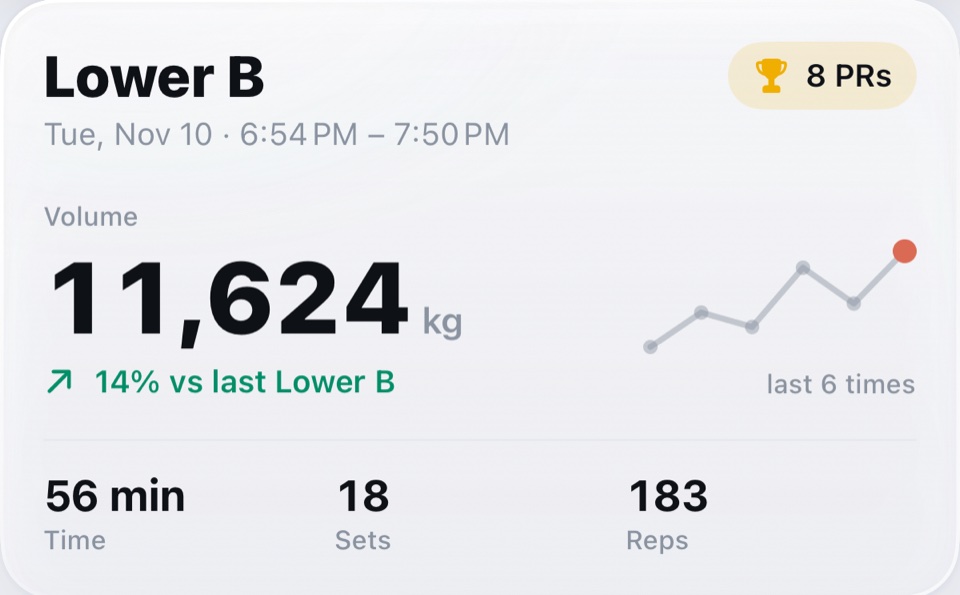
Log this plan in Physicly
The app builds this same program from your answers, records every set and tells you when to add weight.
Get this plan in the appPhysicly for iPhone- MonAUpper body
- TueBLower body
- WedRest
- ThuCUpper body
- FriDLower body
- SatRest
- SunRest
AUpper body · chest firstMon · 40 min · Chest, back, shoulders
-
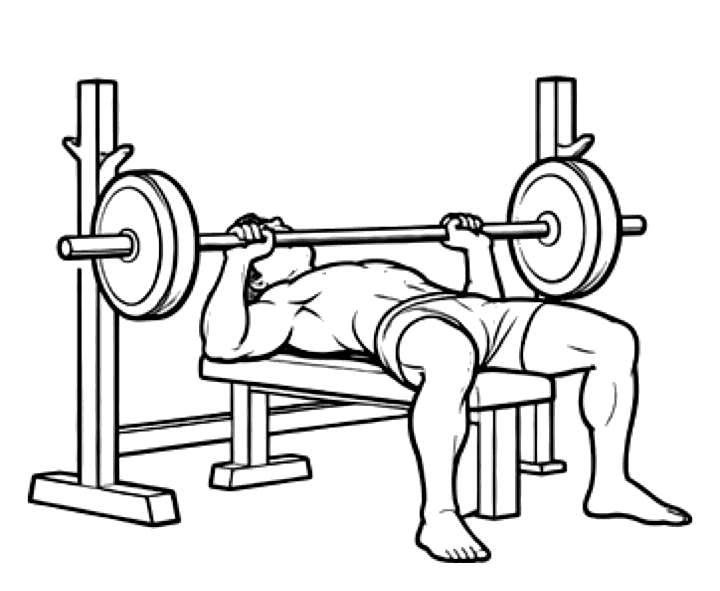
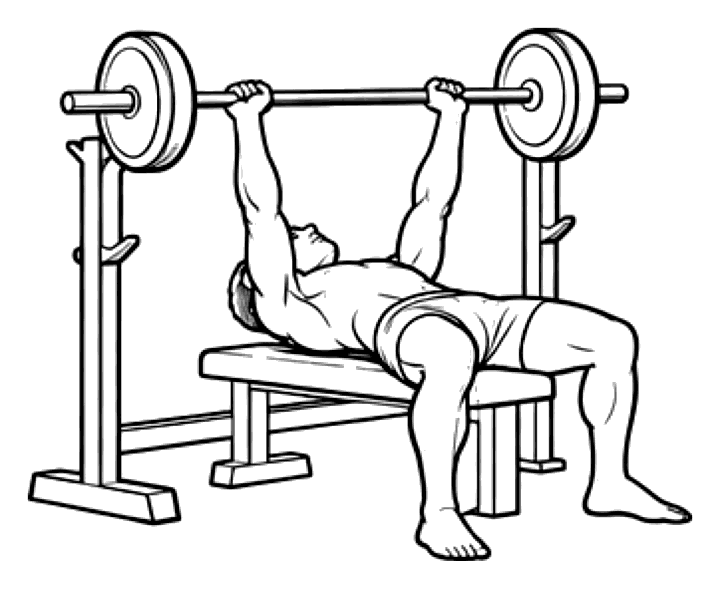 Bench Press (Barbell)3 × 6–8 reps · rest 2:30 min
-
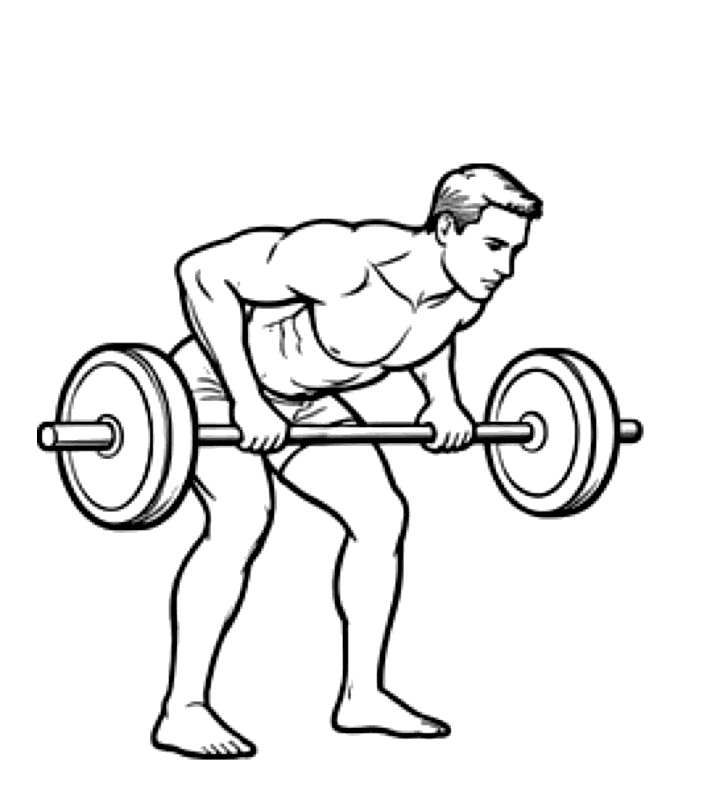
 Bent Over Row (Barbell)3 × 8–10 reps · rest 2 min
-
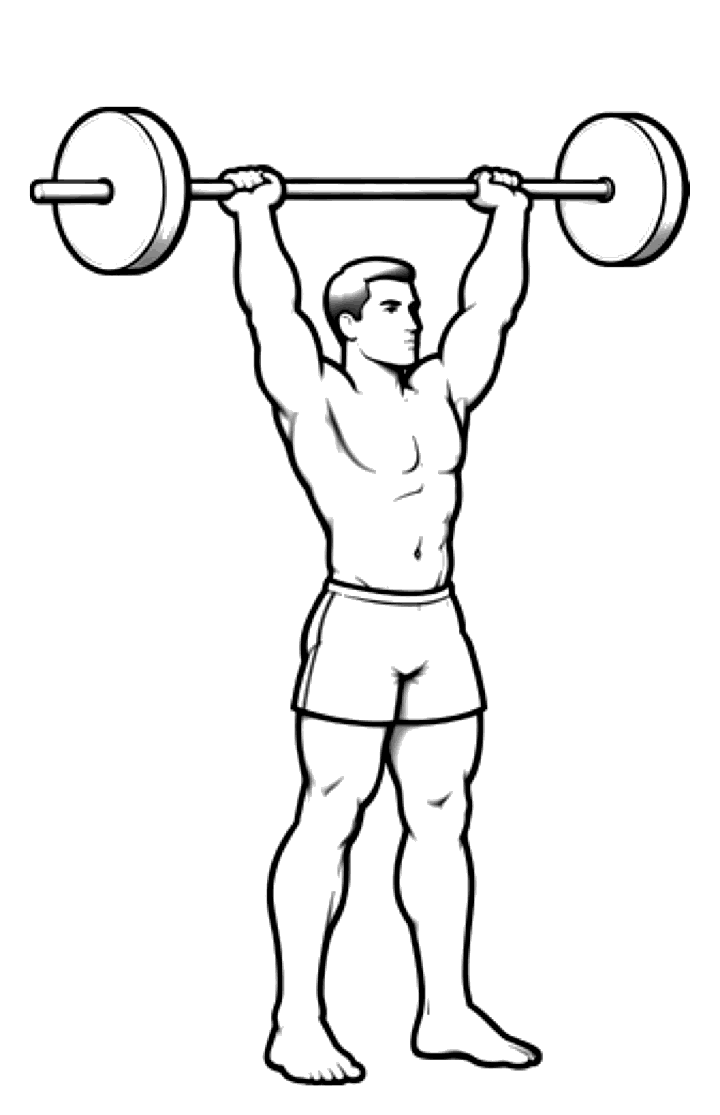
 Overhead Press (Barbell)3 × 8–10 reps · rest 2 min
-
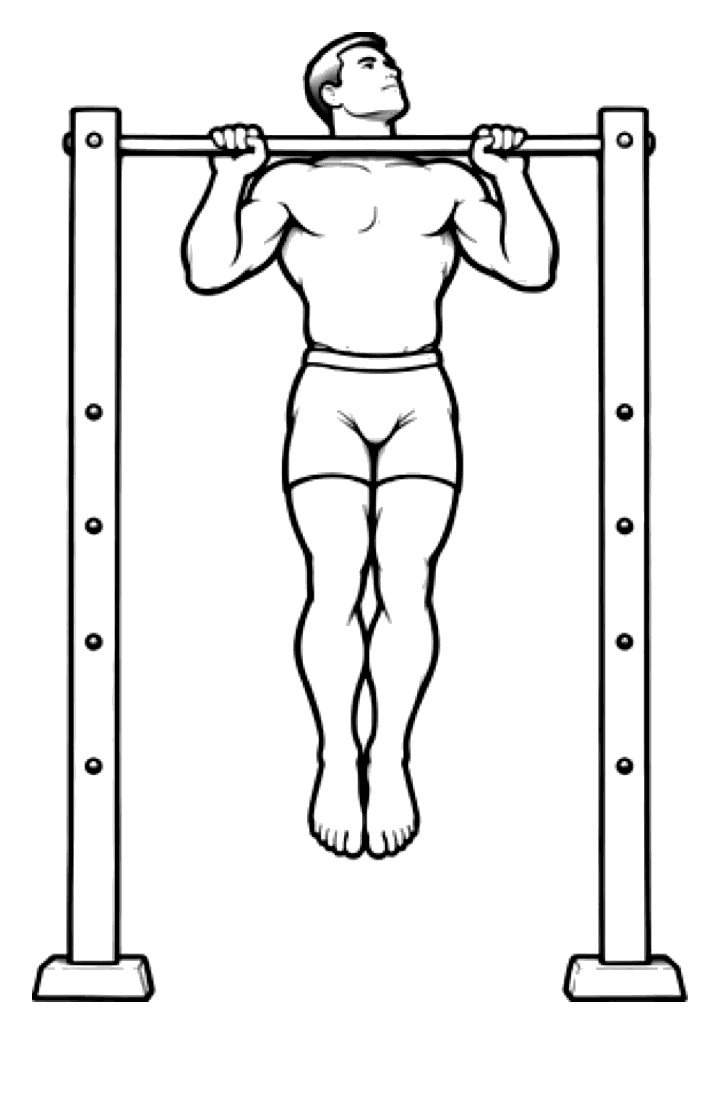
 Pull-up3 × 8–15 reps · rest 90 s
-
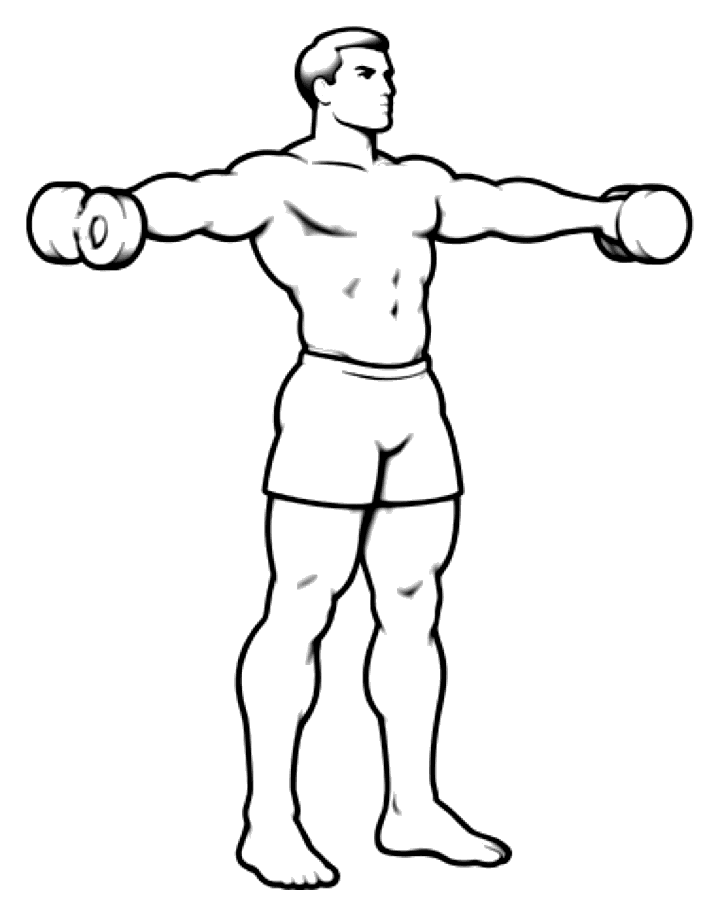
 Lateral Raise (Dumbbell)3 × 12–15 reps · rest 60 s
BLower body · squat dayTue · 40 min · Quads, hamstrings, calves
-
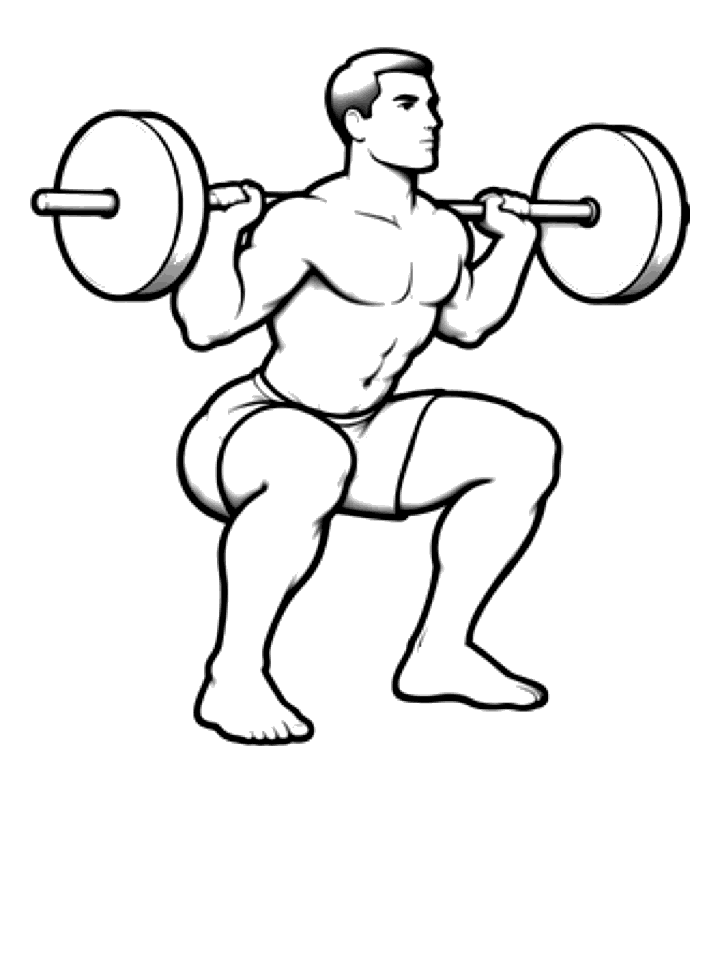
 Squat (Barbell)3 × 6–8 reps · rest 2:30 min
-
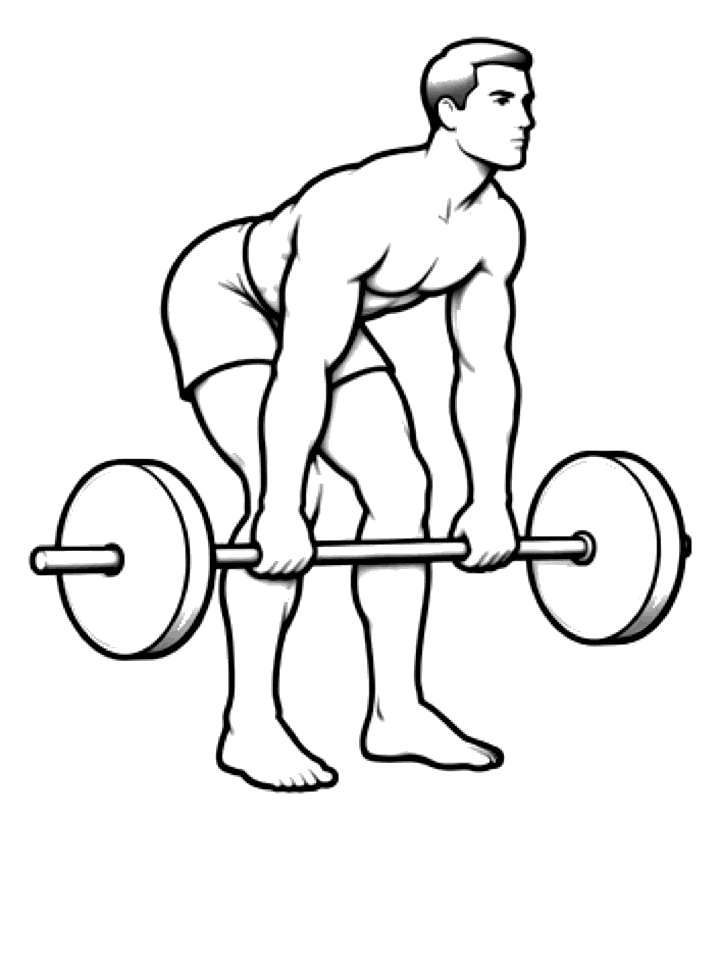
 Romanian Deadlift (Barbell)3 × 8–10 reps · rest 2 min
-
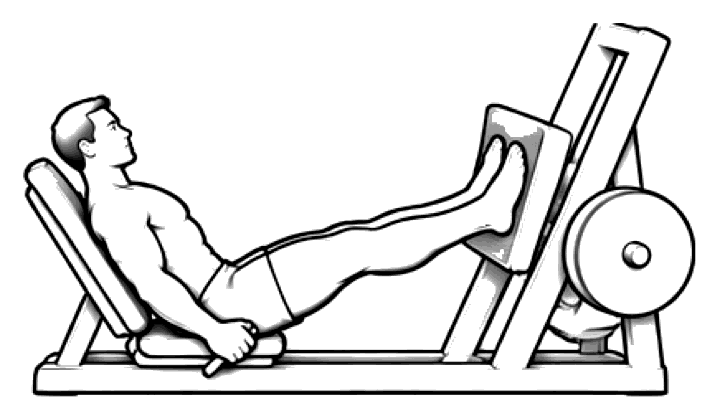
 Leg Press (Machine)3 × 10–12 reps · rest 90 s
-
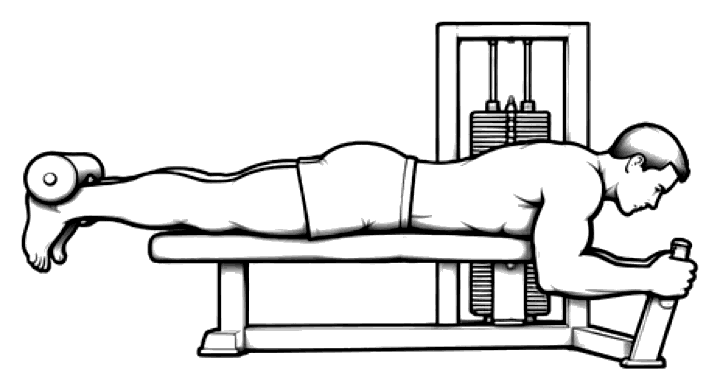 Lying Leg Curl (Machine)3 × 10–12 reps · rest 90 s
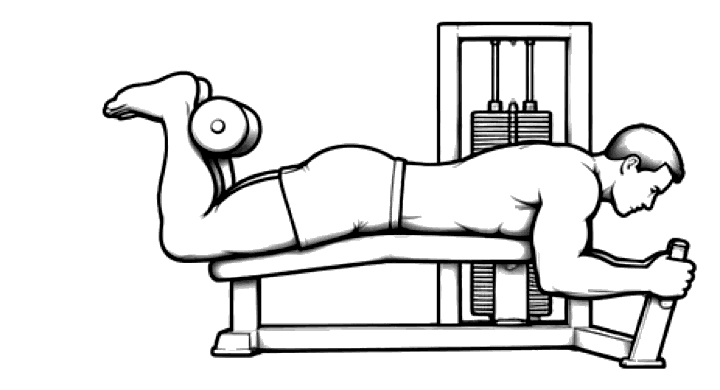
Works Hamstrings · also Calves
-
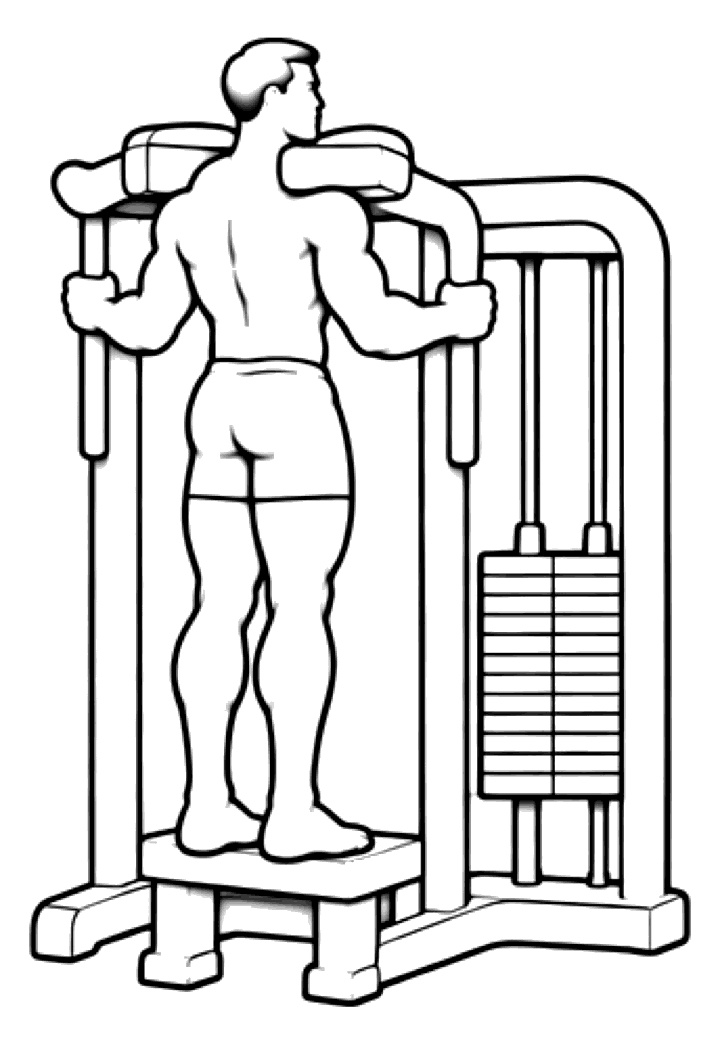 Standing Calf Raise (Machine)3 × 12–15 reps · rest 60 s
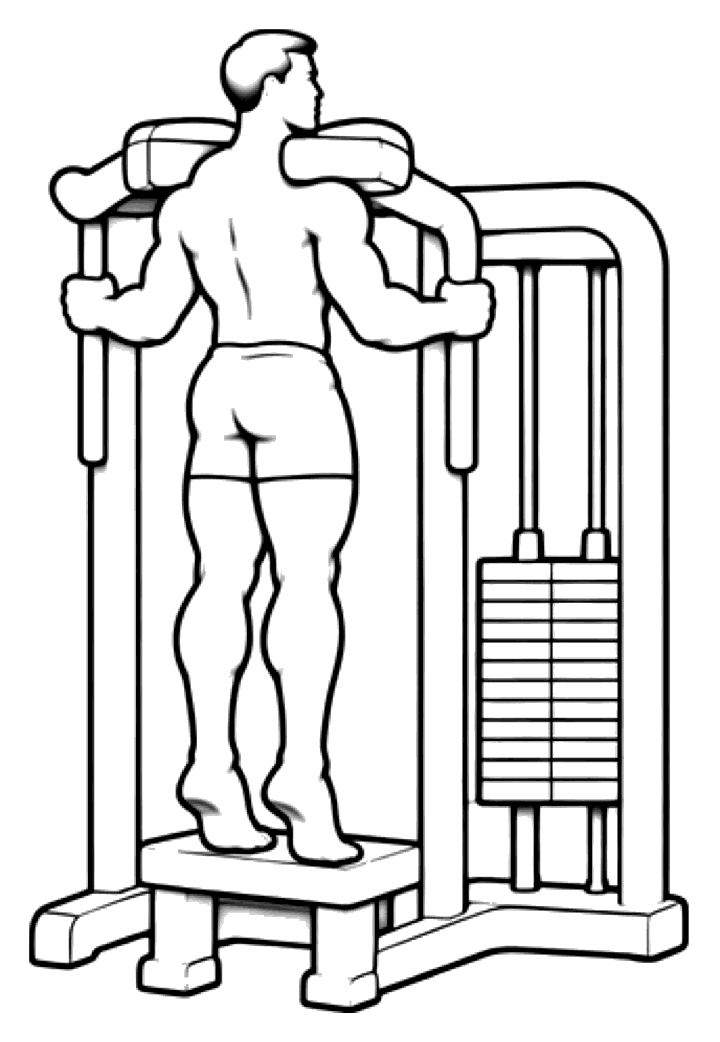
Works Calves
CUpper body · back firstThu · 40 min · Back, chest, shoulders
-
Pull-up3 × 8–15 reps · rest 2:30 min
-
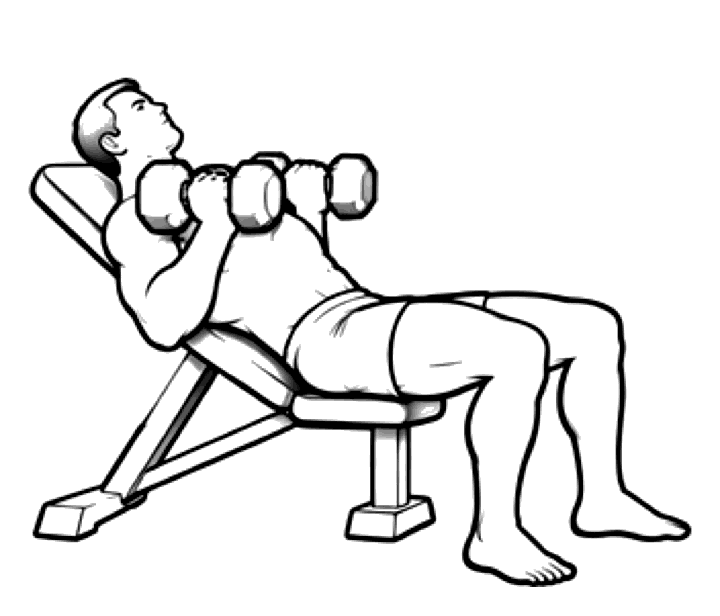 Incline Bench Press (Dumbbell)3 × 8–10 reps · rest 2 min
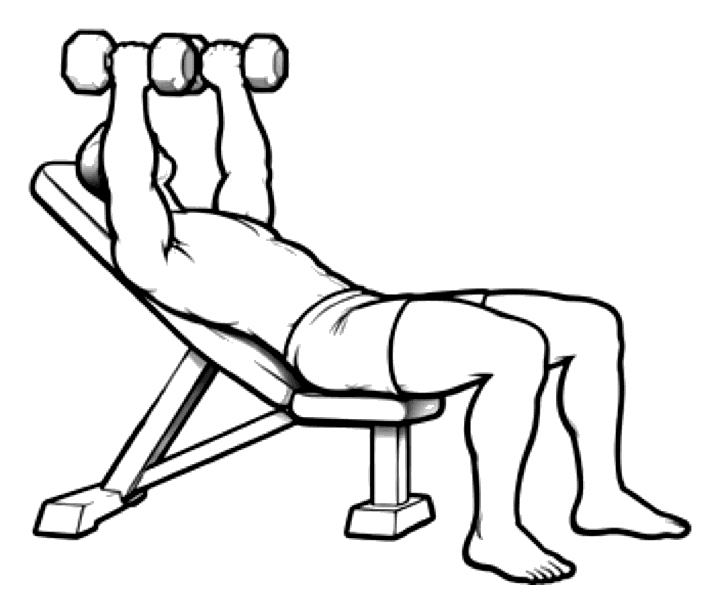
Works Chest · also Shoulders, Triceps
-
Bent Over Row (Barbell)3 × 8–10 reps · rest 2 min
-
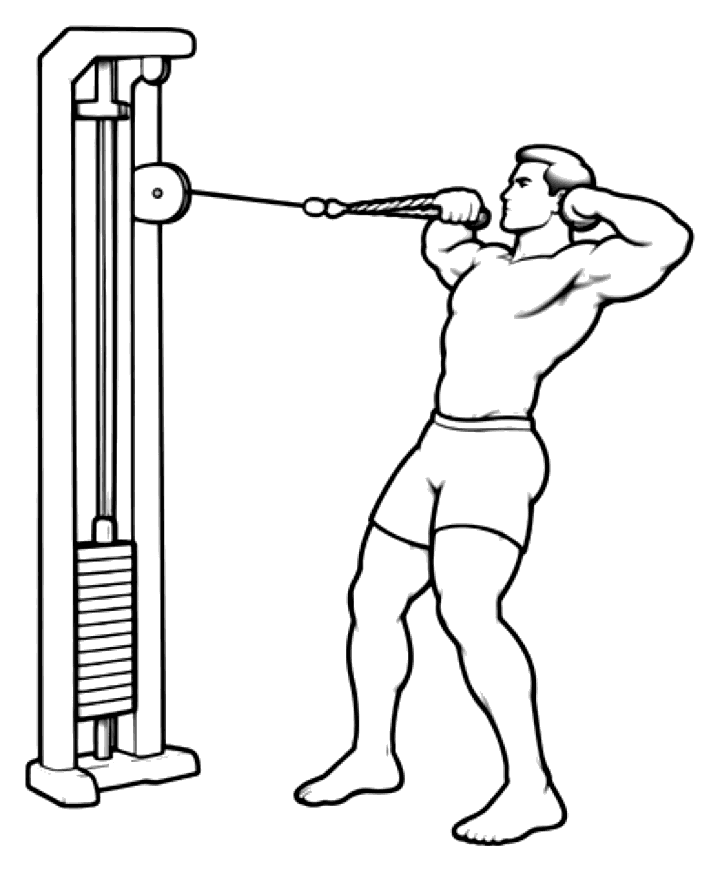
 Face Pull (Cable)3 × 12–15 reps · rest 60 s
-
Lateral Raise (Dumbbell)3 × 12–15 reps · rest 60 s
DLower body · deadlift dayFri · 40 min · Hamstrings, glutes, quads
-
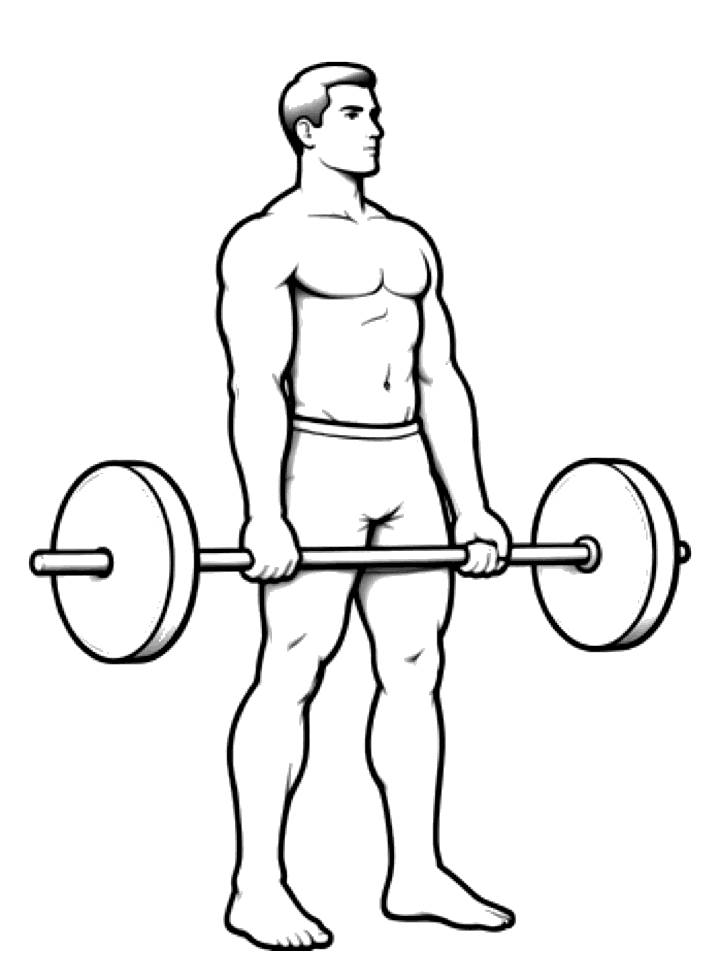
 Deadlift (Barbell)3 × 6–8 reps · rest 2:30 min
-
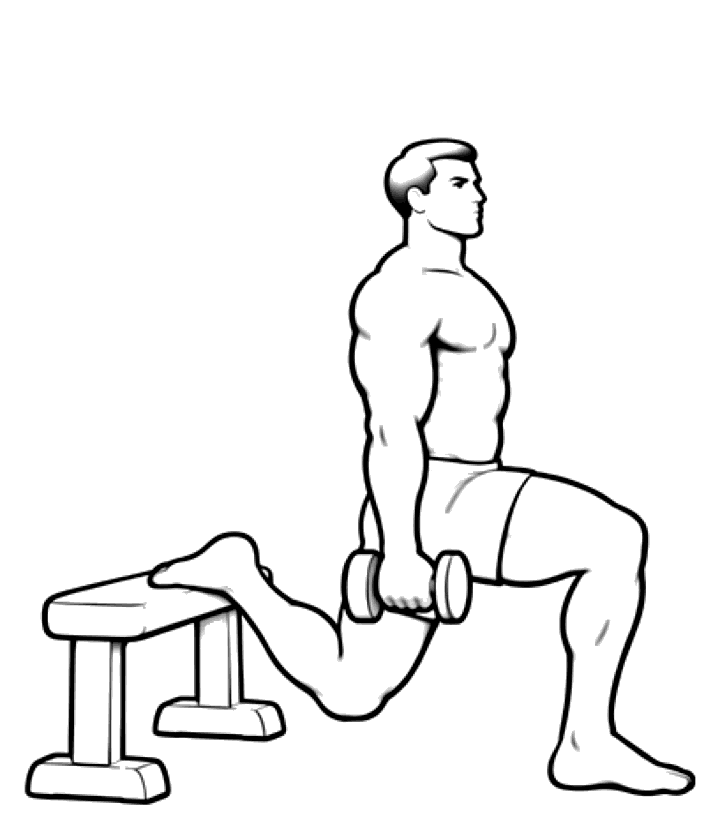
 Bulgarian Split Squat (Dumbbell)3 × 8–10 reps · rest 2 min
-
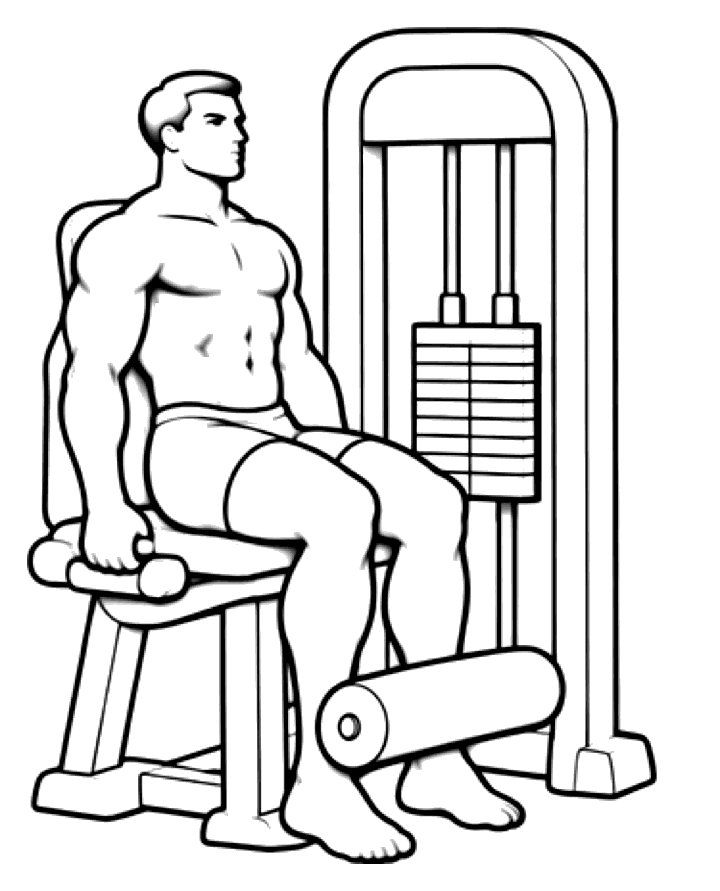 Leg Extension (Machine)3 × 10–12 reps · rest 90 s
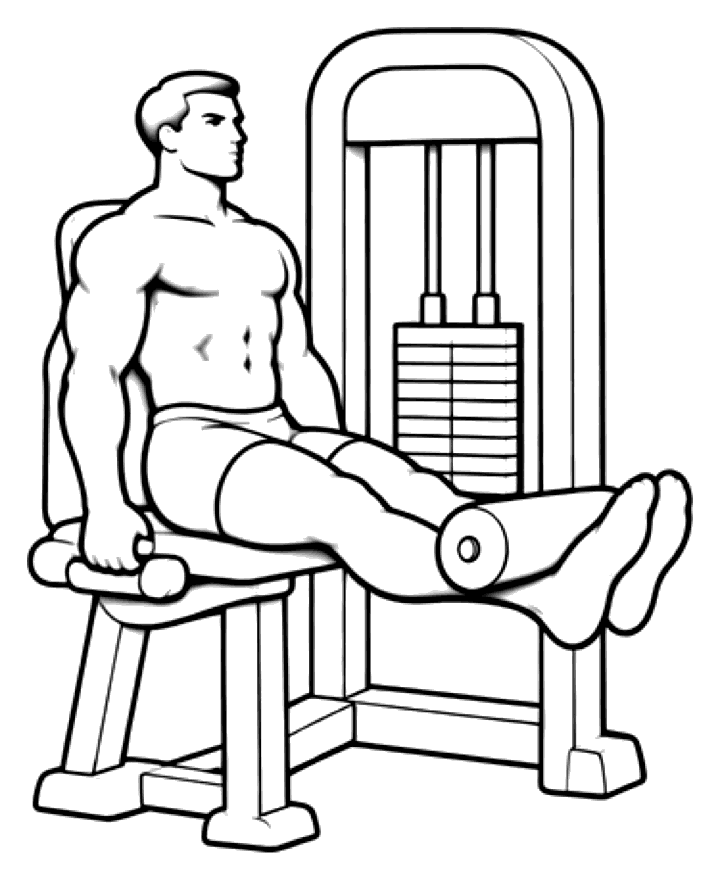
Works Quads
-
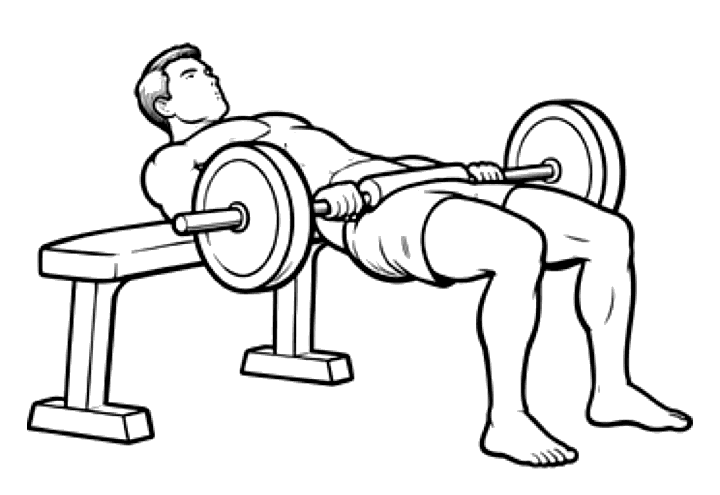
 Hip Thrust (Barbell)3 × 10–12 reps · rest 90 s
-
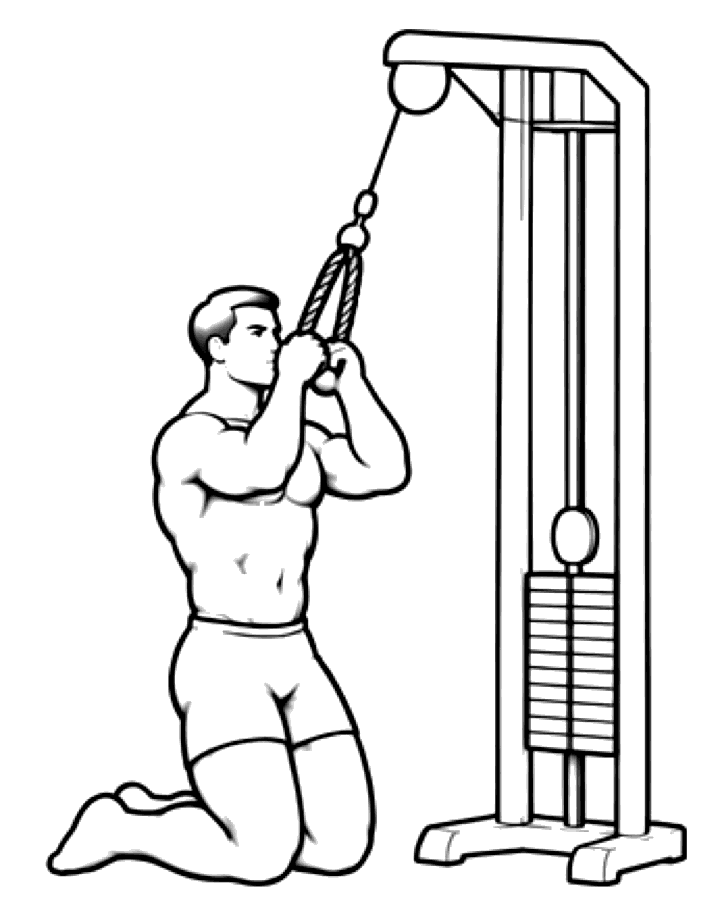 Cable Crunch3 × 12–15 reps · rest 60 s
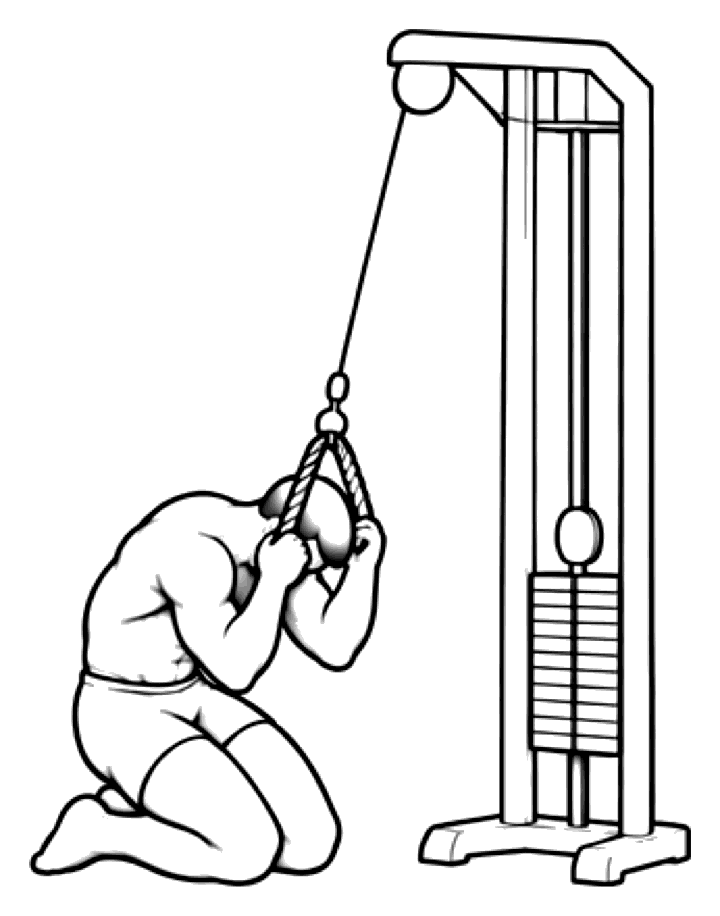
Works Abs
How hard Stop with about 2 reps left in the tank.
How to progress Hit the top of the rep range on every set, then add weight next time (bodyweight moves: add reps).
General guidance for healthy adults. Stop any exercise that hurts, and check with a professional if you have an injury or a medical condition.
Log this plan in Physicly: physicly.app
 Track this plan in PhysiclyLogs every set · for iPhone
Two uppers, two lowers.
- Mon A Upper body · chest first Chest, back, shoulders · 40 min
- Tue B Lower body · squat day Quads, hamstrings, calves · 40 min
- WedRest
- Thu C Upper body · back first Back, chest, shoulders · 40 min
- Fri D Lower body · deadlift day Hamstrings, glutes, quads · 40 min
- SatRest
- SunRest
Why does the week rest on Wednesday?
Monday and Tuesday cover the whole body once. Wednesday off lets both halves recover before Thursday and Friday cover it again. The weekend rest then sets up the next Monday, so no muscle is trained on back-to-back days.
Training Monday, Tuesday, Thursday and Saturday works too. What breaks the split is two lower days in a row: legs carry the heaviest loads and take the longest to come back.
Back and shoulders lead the week.
Hard sets per muscle a week counting each exercise toward its main muscles
- Back12
- Shoulders12
- Quads12
- Hamstrings9
- Chest6
- Glutes6
- Calves3
- Abs3
10 sets: a common weekly target for growth
Why does chest get fewer sets than back?
Each upper day has two or three pulling moves and one or two pressing moves, so back adds up faster than chest. That balance is on purpose: most people press far more than they pull, and a strong back keeps the shoulders healthy.
Chest still gets the bench press and incline press as main lifts, plus work from overhead presses. If you want more, choose Chest as a focus area and the generator adds a fly on each upper day.
Four days, the middle ground.
| Split | Days a week | Each muscle | Session | Best for |
|---|---|---|---|---|
| Beginner plan | 3 | 3× a week | ~40 min | Your first months |
| Full body routine | 3 | 3× a week | 40–45 min | Busy weeks |
| Upper lower split this page | 4 | 2× a week | ~40 min | Most lifters |
| Dumbbell only plan | 4 | 2× a week | ~40 min | Home with dumbbells |
| 5-day split | 5 | 2× a week | ~40 min | Training most weekdays |
| Push pull legs | 6 | 2× a week | ~40 min | Experienced, recovers well |
Is upper lower better than full body at four days?
At four days, yes for most people. Full body at four days repeats two workouts twice, which means four hard leg sessions a week. Upper lower gives legs two sessions and the upper body two, with more sets in each.
It is also the easiest split to keep when a week goes wrong. Miss a day and you push the rest along: each workout still comes up once.
Upper lower split, explained
Who it’s for, the schedule, the volume and how to progress.
What is an upper lower split?
An upper lower split alternates two kinds of workout: upper-body days for chest, back, shoulders and arms, and lower-body days for quads, hamstrings, glutes, calves and abs. Four sessions a week, two of each, train every muscle twice with a rest day in the middle of the week.
The sample above is the Physicly engine’s 4-day plan for an intermediate lifter at the gym. The two upper days differ: one starts with the bench press, the other with pull-ups. The two lower days differ too: a squat day and a deadlift day. Each muscle gets two slightly different sessions a week.
Who is the upper lower split for?
Lifters who can train four days a week, from the end of the beginner stage to advanced. It’s a natural step up from a 3-day full body routine: same frequency, more sets per session, sessions that stay around 40 minutes.
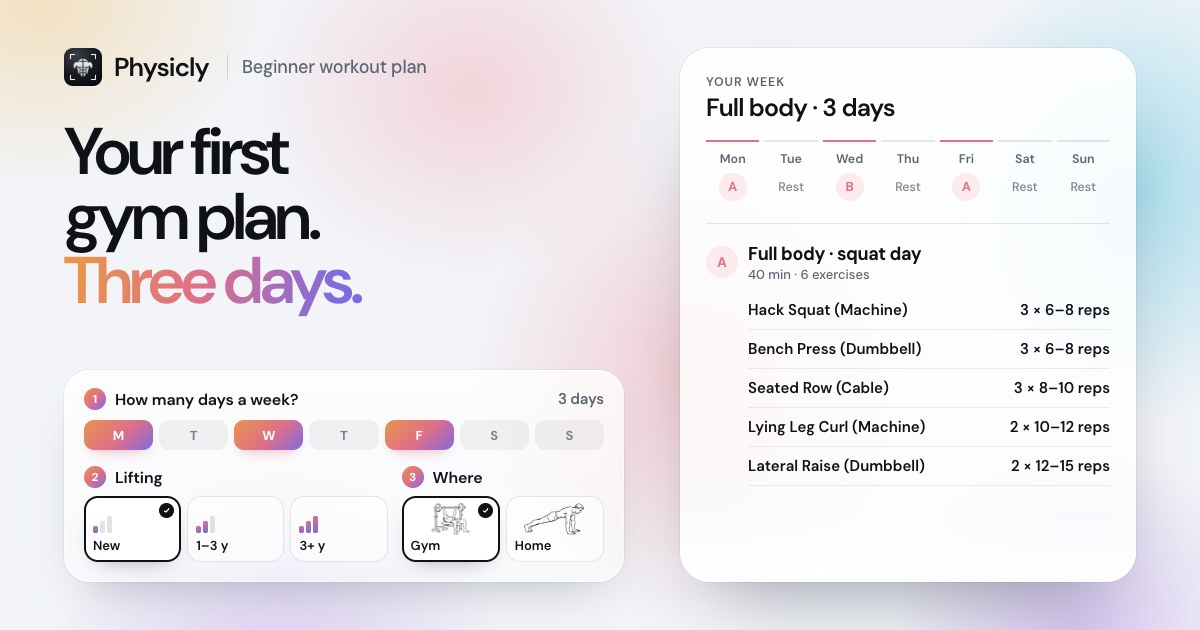
New lifters can run it too if they have four days; the generator then uses machines and dumbbells first and fewer sets on smaller moves. With only three days, a full body routine fits better.
What does the weekly schedule look like?
Upper on Monday, lower on Tuesday, rest on Wednesday, upper on Thursday, lower on Friday, weekend off. That’s the layout above. Monday, Tuesday, Thursday and Saturday works too. Avoid stacking both lower days back to back: legs need the most recovery.
Miss a day? Don’t skip the workout. Push the rest of the week by a day, so each upper and lower session still comes up once.
How many sets per muscle a week?
Counting each exercise toward its main muscles only, the sample gives back about 12 hard sets a week, shoulders and quads about 12, and chest and hamstrings about 6 of direct work, with more from compound lifts (rows hit the biceps, presses the triceps).
A common guideline for growth is about 10–20 hard sets per muscle a week. If your chest or arms lag behind, pick them as a focus area in the generator: it adds an isolation exercise on the upper days, up to two extras per workout.
How do you progress on an upper lower split?
Main lifts sit at 6–8 reps with long rests; supporting moves at 8–12; isolation work at 12–15. Use a weight that leaves about two reps in reserve at the bottom of the range. Add reps each session, and add weight when every set hits the top of the range.
Because each workout comes up once a week, progress is tracked week to week, not session to session. A log is the difference between training and exercising: the Physicly app keeps one and suggests the next weight.
What are common upper lower mistakes?
Skimping on lower days. Lower days are harder, so they tend to get shorter. Give the squat and the deadlift the same effort as the bench press.
Repeating identical days. Two copies of the same upper workout miss angles. Starting one day with a press and the other with a pull covers more.
Too little rest between sets. Main lifts need 2–3 minutes to be done with good weight. Rushing them turns strength work into cardio.
Upper lower vs other splits
Versus full body: the same twice-a-week frequency, more room per session, one more day a week. Versus push pull legs: upper/lower wins at four days, PPL at six. The 5-day split combines the two.
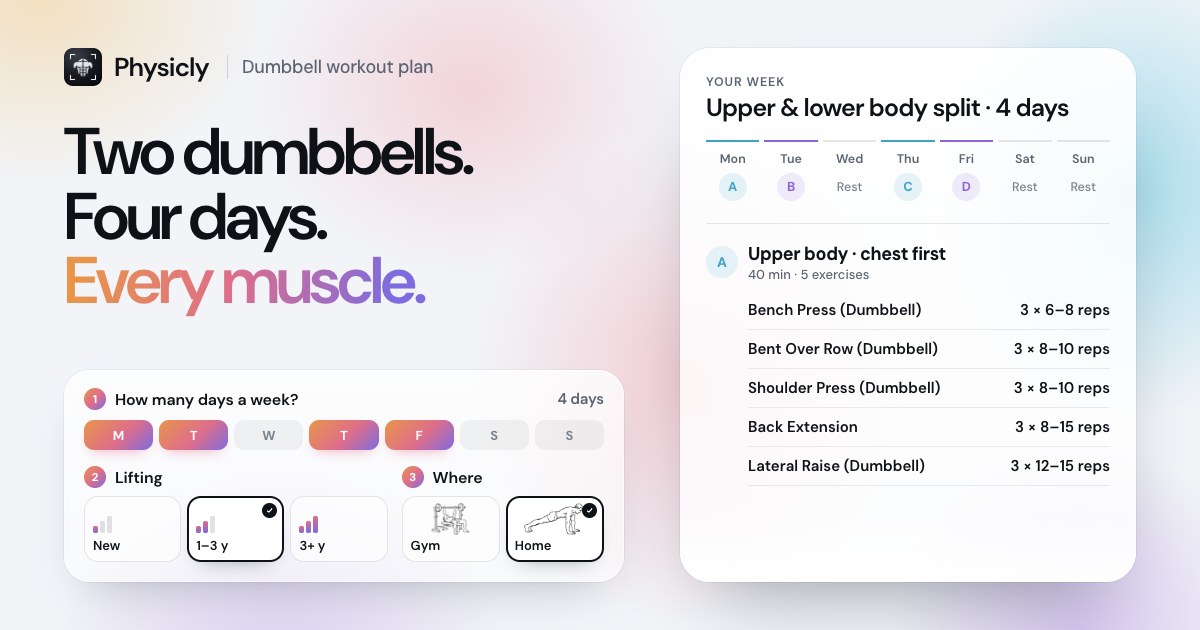
Training at home with dumbbells? The dumbbell only plan is an upper lower split built only from dumbbell and bodyweight moves.
Which split fits you?
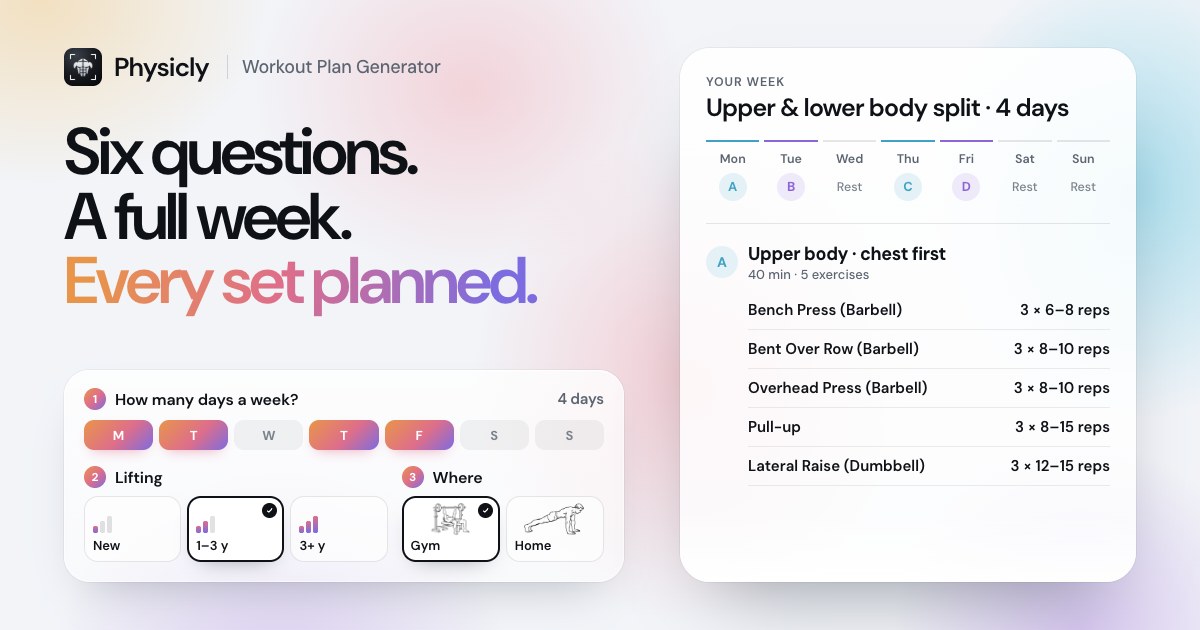
Pick by the days you can train every week, or let the generator choose from six questions.
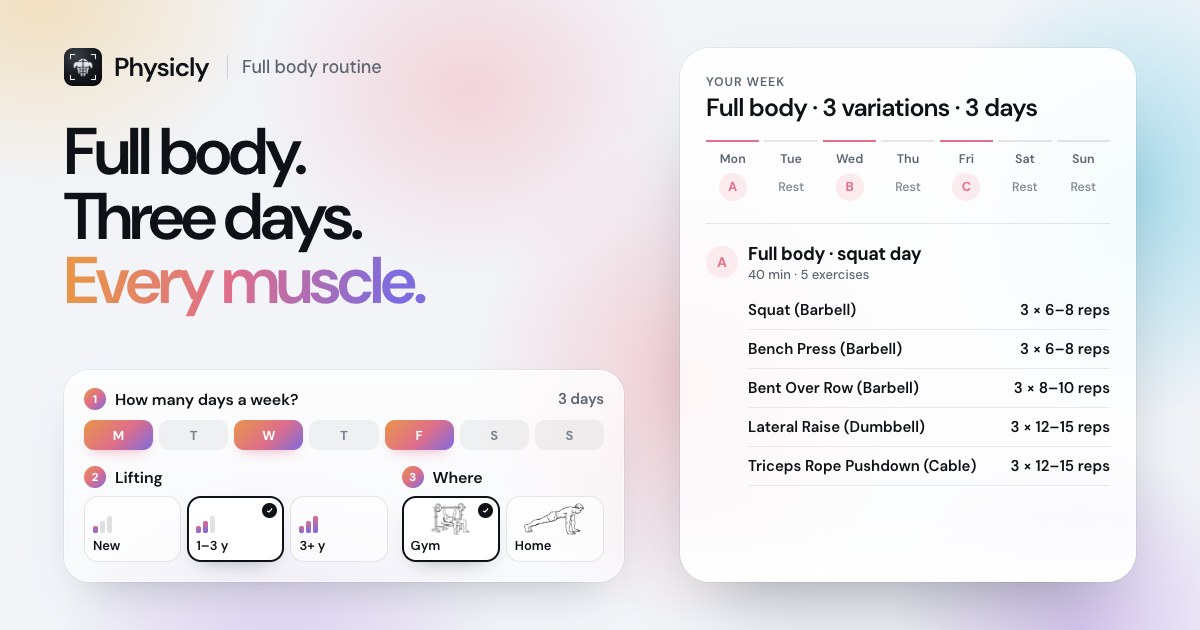 Full body routine
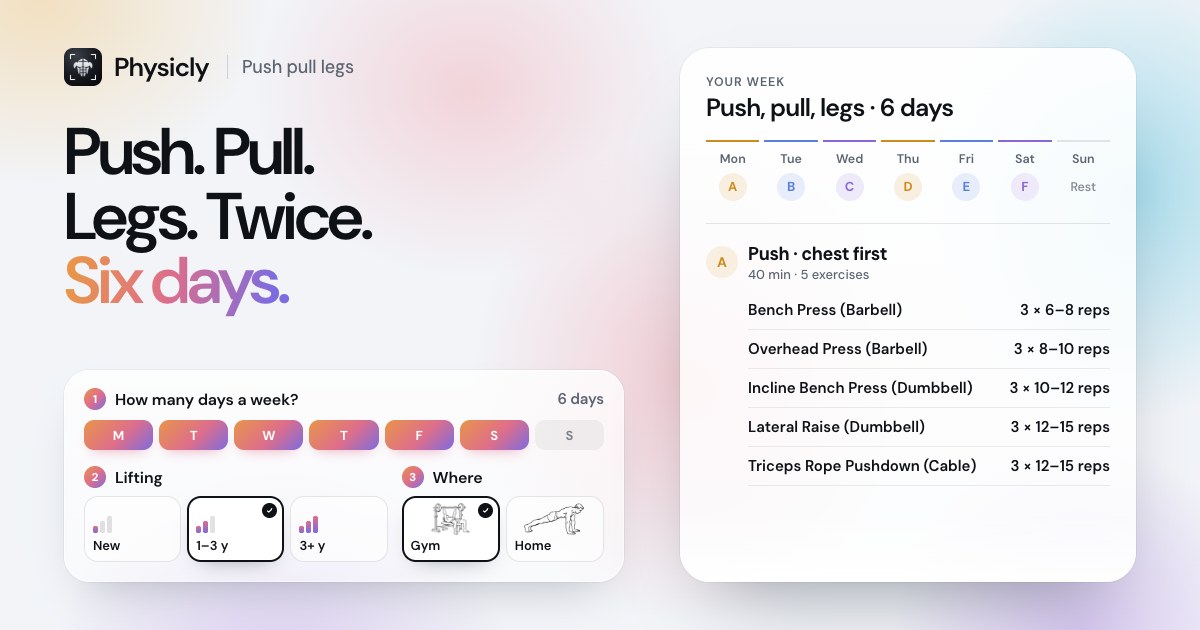 Push pull legs
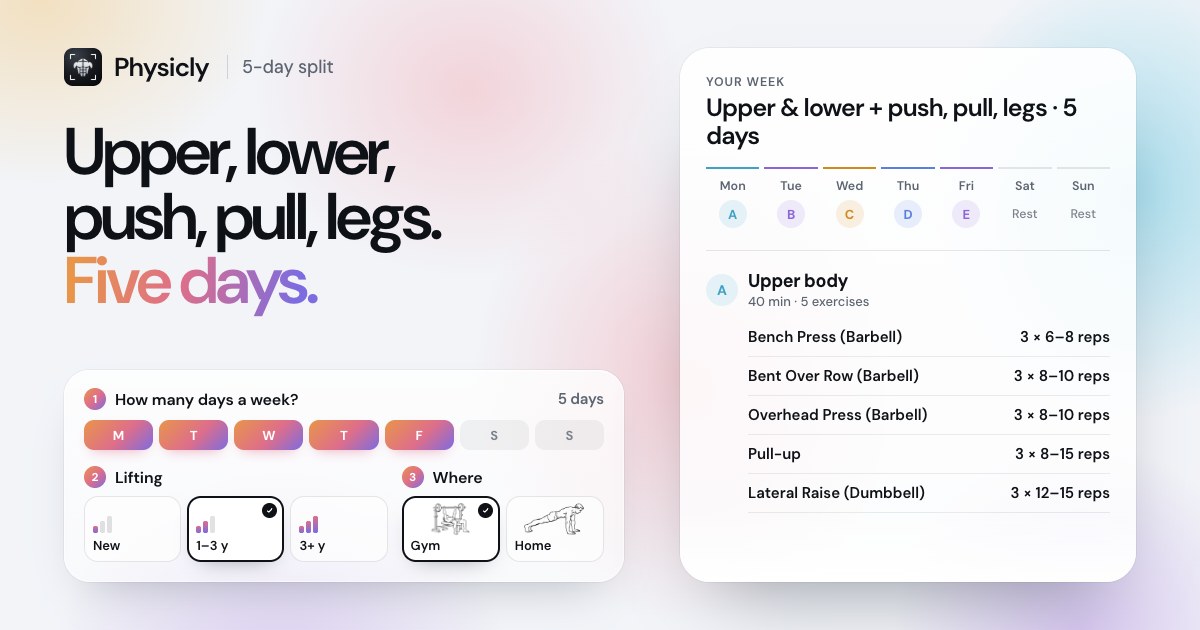 5-day split
 Dumbbell only plan
 Beginner plan
 Build your own plan
Upper lower split questions
Something else? Write to [email protected].
Is a 4-day upper lower split good for building muscle?
Yes. It trains every muscle twice a week with enough sets in each session to make it count, and leaves three rest days. That frequency and volume is what most lifters need to keep growing after the beginner stage.
What is the best schedule for an upper lower split?
Upper on Monday, lower on Tuesday, rest on Wednesday, upper on Thursday, lower on Friday, and the weekend off. Any schedule works as long as the same muscles get at least a day between sessions.
Can beginners do an upper lower split?
Yes, if they can train 4 days a week. The Physicly generator gives new lifters an upper/lower split at 4 days, with fewer sets on smaller moves and machines and dumbbells before barbells. At 2–3 days, full body is the better start.
Upper lower vs push pull legs: which is better?
At 4 days, upper/lower: it trains each muscle twice a week, while push pull legs on 4 days hits some muscles only once. Push pull legs fits 6 days, where it trains everything twice. Choose by the days you can train.
Should I do the same upper day twice a week?
It’s better to vary them. The Physicly upper/lower plan has a chest-first and a back-first upper day, and a squat day and a deadlift day for the lower body, so each muscle gets a slightly different stimulus on its two days.
How long is an upper lower split workout?
About 40 minutes in the Physicly sample: 5 exercises of 3 sets each. Add a third set to smaller moves or one focus exercise and it grows to 45–50 minutes.
Log this plan. See what grows.
Physicly builds this program in the app, logs every set, tells you when to add weight and shows your physique change from one photo a day.
 Or scan it with your iPhone camera.